
Overview
A child’s early experiences and surroundings shape their health, development and wellbeing for life (Figure 1). If a child gets the right support from the beginning, they have the best chance to thrive. Unfortunately, some children do not get the best support for their needs.
More than one third of children in Australia experience some form of inequity. This might be because of their family’s social or economic situation. These inequities can affect children’s health, development and wellbeing now and in the future. It can also make it harder for them to reach their potential.
Childhood inequities can be prevented.
What is the Changing Children’s Chances project?
The Changing Children’s Chances project is focused on making sure every child has the opportunity to thrive.
Over the past decade, the CCC approach has been refined to draw on existing data to determine the policies that are critical to address inequities in child health, development and wellbeing.

Figure 1. Framework for understanding child disadvantage from a social determinants perspective.
Our research has already shown that if we reduce these challenges, we can improve children’s health, development and wellbeing. We’re now looking at ways to combine different types of approaches to help children who may face more complex challenges.
We work closely with a group of policy experts to make sure our research is useful and makes an impact. This group is made up of Australian state and federal governments and non-government organisations.
Now in its third phase, CCC is increasing its focus on driving policy change to ensure all children have the opportunity to thrive.
Access an overview of CCC Phase 3.0
Our impacts and achievements
CCC 1.0 (2016 to 2020)
- We described the complex circumstances in which children are born, live, learn and grow – known as social determinants.
- We detailed how these social determinants shape children’s health, wellbeing and development.
CCC 2.0 (2021-2024)
- We worked to better understand policy opportunities for reducing inequities in children’s mental health, physical health and academic achievement.
- We modelled 'stacking' interventions that can reduce inequities, particularly for those experiencing the greatest vulnerability or disadvantage.
- We proposed that actions taken together at the family, community and policy level, can be used to best improve children’s health, wellbeing and development.
CCC 3.0 (2025-2028)
We now know that meaningfully reducing inequities requires ‘stacking’ a range of complementary policy interventions in the early years. That is, targeting combinations of the modifiable social determinants that shape child health, development and wellbeing.
While Australian governments have made a commitment to reducing child inequities, greater specificity is urgently needed on which interventions, and in what combinations, should be prioritised for maximum impact. Importantly, this takes into account limited resources.
This will support more precise policy responses by identifying the most effective strategies across health, education, and social services. These strategies can then be aligned with the right populations, timing, and intensity.
To address child inequities, evidence points to the importance of:
- Taking a life course approach. Development starts from birth and is shaped throughout childhood, with lasting effects into later life. Intervening early is key to promoting long-term health, development and wellbeing.
- Addressing the social determinants of health. CCC has developed a framework to understand the many factors that affect children’s health, development and wellbeing, and determine where to intervene. Reducing inequities means addressing both structural issues (such as household income or housing), and more immediate ones (like parenting).
- Moving away from ‘silver bullet’ solutions. Addressing inequity is complex and requires complex intervention approaches. CCC is helping to drive a shift in thinking, suggesting that combining or ‘stacking’ multiple complementary interventions across key developmental stages, rather than relying on isolated efforts, is key to addressing inequities on a more substantial scale (Figure 2).
- The link between child development and health. Investing in all aspects of child development supports a healthier, more productive society and prevents future problems. Australian health policy already recognises the need for coordinated, cross-sector approaches to promote children’s holistic development.
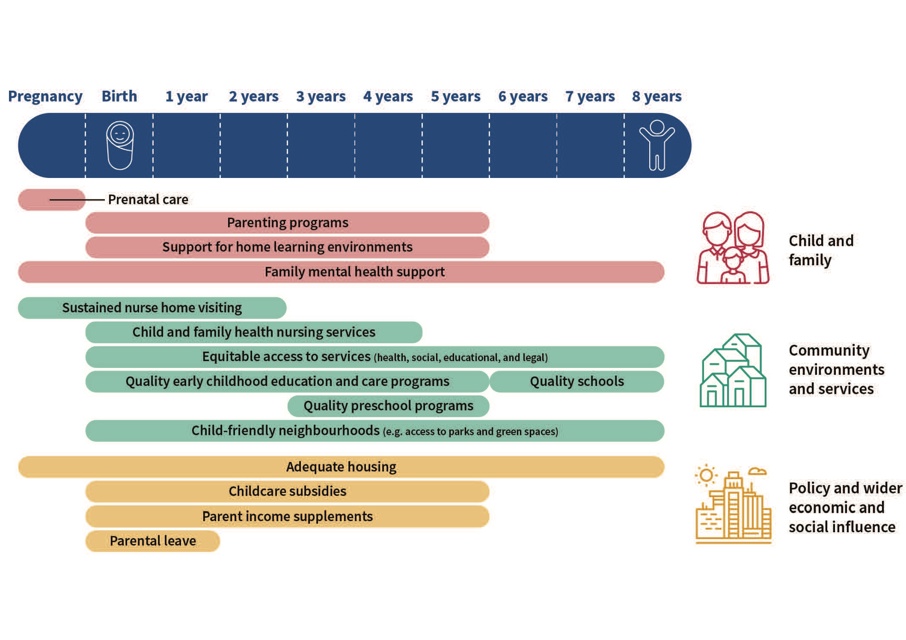
Figure 2. Stacking interventions for reducing inequities.
What does Changing Children's Chances hope to achieve?
After nearly a decade of impactful work, CCC is positioned to lead a global agenda to reduce inequities in children’s health, development and wellbeing. Through our collaborations across Australia, the UK and Canada, we can foster a growing global network of researchers to tackle common challenges and find solutions together.
Our approach
In CCC 3.0, the CCC research program will build on nearly a decade of impact by:
- Building capacity to leverage existing data to better understand and measure inequities. We use existing Australian and international data sources - both cohort studies and linked administrative datasets - to understand the drivers of inequity and inform more effective policy. Our work is improving how childhood disadvantage is measured, monitored, and understood to better guide action. Our data sources include:
- Using cutting edge tools to model interventions. Using existing data sources, we will use modelling to find out which intervention targets, in which combinations, would achieve maximum impact on child inequities. We can efficiently, robustly, and rapidly generate evidence on the potential impact of stacked policy interventions that would be slow, unethical, or expensive to test in randomised controlled trials.
- Translating research into real-world policy impact. We work in close collaboration with our Knowledge Translation Reference Group (KTRG) made up of policy experts from Australian state and federal governments and non-government organisations. This helps to ensure that our investigations are relevant and accessible to knowledge users (Figure 3). By helping knowledge users understand which combinations of interventions are beneficial, our findings can help direct limited public funds towards opportunities that have the greatest impact.
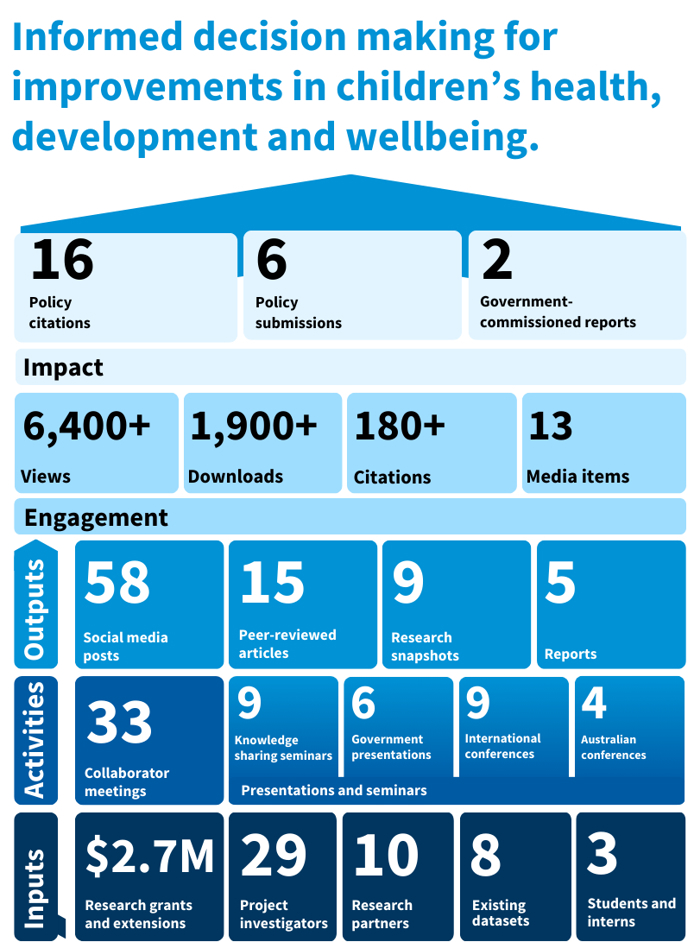
Figure 3. Achieving and assessing research engagement and impact.
Our team
Investigator team
- Professor Sharon Goldfeld (Lead Investigator), Murdoch Children’s Research Institute
- Dr Meredith O’Connor, Murdoch Children’s Research Institute
- Professor Naomi Priest, Murdoch Children’s Research Institute
- Associate Professor Margarita Moreno- Betancur, Murdoch Children’s Research Institute
- Dr Marnie Downes, Murdoch Children’s Research Institute
- Professor Hannah Badland, RMIT University
- Professor Susan Woolfenden, The University of New South Wales
- Dr Amanda Alderton, RMIT University
- Dr Sarah Gray, Murdoch Children’s Research Institute
- Dr Andi Camden, University of Toronto, Canada
- Rachel Whiffen, Murdoch Children’s Research Institute
- Leanne Constable, Murdoch Children’s Research Institute
- Professor Gerry Redmond, Flinders University
- Dr Astrid Guttmann, University of Toronto, Canada
- Dr Josie Dickerson, Bradford Institute for Health Research, UK
- Professor Ruth Gilbert, University College London, UK
- Dr Francisco Azpitarte-Raposeiras, Loughborough University, UK
The Changing Children’s Chances team works closely with our Knowledge Translation Reference Group, made up of policy experts from Australian state and federal governments and non-government organisations.
Changing Children’s Chances team
- Professor Sharon Goldfeld – Group Lead
- Dr Sarah Gray – Project Manager
- Dr Elodie O’Connor – Research Officer
- Dr Jun Guo – Research Assistant
- Subhavi De Silva – Research Assistant
- Meg Stonnill – Research Assistant
Partners and funders
The Changing Children’s Chances project (2025-2028) is funded by the National Health and Medical Research Council Partnership Projects (2040703). Murdoch Children’s Research Institute are partnering with The Australian Government Department of Social Services, The Victorian Health Promotion Foundation, Brotherhood of St Laurence, Beyond Blue, The Australian Government Department of Education, The Australian Government Department of Health, Disability and Ageing, The Victorian Department of Health, The Victorian Council of Social Service, and The Australian Government Department of The Treasury.
Resources
Highlights
- Access our research page on Figshare to learn more.
- What happens when you give a low-income family $26,000 in their child’s first year? We think we’ve found out
- Read the report on Measuring vulnerability and disadvantage in early childhood data collections
- Read our co-created model for research engagement and impact.
Research snapshots
- Project Overview - Phase 3.0
- Summary - Phase 2.0
- Project Overview - Phase 2.0
- Understanding child disadvantage
- Addressing disadvantage to optimise children’s development in Australia
- Reducing inequities in children's reading skills
- Reducing inequities in children's mental health
- Household income supplements boost early childhood development
- How childhood adversity gets under the skin
Academic papers
Phase 1.0
- Goldfeld, S., O'Connor, M., Cloney, D., Gray, S., Redmond, G., Badland, H., Williams, K., Mensah, F., Woolfenden, S., Kvalsvig, A., & Kochanoff, A. (2018). Understanding child disadvantage from a social determinants perspective. Journal of Epidemiology & Community Health, 72(3), 223-229. http://dx.doi.org/10.1136/jech-2017-209036
- Goldfeld, S., O'Connor, M., O'Connor, E., Chong, S., Badland, H., Woolfenden, S., Redmond, G., Williams, K., Azpitarte, F., Cloney, D., & Mensah, F. (2018). More than a snapshot in time: Pathways of disadvantage over childhood. International Journal of Epidemiology, 47(4), 1307-1316. https://doi.org/10.1093/ije/dyy086
- Goldfeld, S., O'Connor, M., Chong, S., Gray, S., O'Connor, E., Woolfenden, S., Redmond, G., Williams, K., Mensah, F., Kvalsvig, A., & Badland, H. (2018). The impact of multidimensional disadvantage over childhood on developmental outcomes in Australia. International Journal of Epidemiology, 47(5), 1485-1496. https://doi.org/10.1093/ije/dyy087
- Goldfeld, S., Gray, S., Azpitarte, F., Cloney, D., Mensah, F., Redmond, G., Williams, K., Woolfenden, S., & O'Connor, M. (2019). Driving precision policy responses to child health and developmental inequities. Health Equity, 3(1), 489-494. https://doi.org/10.1089/heq.2019.0045
Phase 2.0
- Goldfeld, S., Moreno-Betancur, M., Guo, S., Mensah, F., O'Connor, E., Gray, S., Chong, S., Woolfenden, S., Williams, K., Kvalsvig, A., Badland, H., Azpitarte, F., & O'Connor, M. (2021). Inequities in children's reading skills: The role of home reading and preschool attendance. Academic Pediatrics, 21(6), 1046-1054. https://doi.org/10.1016/j.acap.2021.04.019
- Goldfeld, S., Gray, S., Pham, C., Badland, H., Woolfenden, S., Schor, E., & O'Connor, M. (2022). Leveraging research to drive more equitable reading outcomes: An update. Academic Pediatrics, 22(7), 1115-1117. https://doi.org/10.1016/j.acap.2022.04.001
- Goldfeld, S., Moreno-Betancur, M., Gray, S., Guo, S., Downes, M., O'Connor, E., Azpitarte, F., Badland, H., Redmond, G., Williams, K., Woolfenden, S., Mensah, F., & O'Connor, M. (2023). Addressing child mental health inequities through parental mental health and preschool attendance. Pediatrics, 151(5), e2022057101. https://doi.org/10.1542/peds.2022-057101
- Priest, N., Guo, S., Gondek, D., O'Connor, M., Moreno-Betancur, M., Gray, S., Lacey, R., Burgner, D. P., Woolfenden, S., Badland, H., Redmond, G., Juonala, M., Lange, K., & Goldfeld, S. (2023). The potential of intervening on childhood adversity to reduce socioeconomic inequities in body mass index and inflammation among Australian and UK children: A causal mediation analysis. Journal of Epidemiology and Community Health, 77(10), 632-640. https://doi.org/10.1136/jech-2022-219617
- Goldfeld, S., Downes, M., Gray, S., Pham, C., Guo, S., O'Connor, E., Redmond, G., Azpitarte, F., Badland, H., Woolfenden, S., Williams, K., Priest, N., O'Connor, M., & Moreno-Betancur, M. (2024). Household income supplements in early childhood to reduce inequities in children’s development. Social Science & Medicine, 340, 116430. https://doi.org/10.1016/j.socscimed.2023.116430
- Goldfeld, S., O'Connor, E., Pham, C., Gray, S., & Changing Children's Chances Investigator Group. (2024). Beyond the silver bullet: Closing the equity gap for children within a generation. Medical Journal of Australia, 221(10), 508-511. https://doi.org/10.5694/mja2.52493
- Hong, W., Mensah, F., O'Connor, E., et al. (2025). Measuring child disadvantage: Comparing multidimensional and socioeconomic approaches for predicting developmental outcomes. Australian Journal of Social Issues 1-10. https://doi.org/10.1002/ajs4.70045
Phase 3.0
- Stonnill, M., Gray, S., Guo, S., Woolfenden, S., & Goldfeld, S. (2025). Early Family Influences on Mental Health Competence and Difficulties for Children From Priority Populations. Australian Journal of Social Issues. https://doi.org/10.1002/ajs4.70083
- Stonnill, M., Gray, S., Woolfenden, S., & Goldfeld, S. (2025). The Extent to Which Policies Are Supporting Families to Improve Child Mental Health Outcomes in Victoria, Australia: A Policy Scoping Review. Health Promotion Journal of Australia, 36(2), e70040. https://doi.org/10.1002/hpja.70040
- Stonnill, M., Gray, S., Woolfenden, S., & Goldfeld, S. (2025). Barriers to Creating and Implementing Child Mental Health Policies That Promote Child Mental Health Competence in Victoria, Australia: A Qualitative Study. Health Promotion Journal of Australia, 36(3), e70046. https://doi.org/10.1002/hpja.70046
- Gray, S., Guo, S., O'Connor, M., O'Connor, E., Williams, K., Badland, H., Woolfenden, S., Dickerson, J., Redmond, G., Downes, M., & Goldfeld, S. (2026). Data for equity: Can linked administrative data inform pathways to more equitable child health? Medical Journal of Australia, 224(3), e70149. https://doi.org/10.5694/mja2.70149
- Gray, S., Guo, S., Pham, C., Downes, M., Lange, K., Woolfenden, S., Redmond, G., Priest, N., O’Connor, M., Badland, H., Azpitarte, F., & Goldfeld, S. (2026). Epidemiology of Child Disadvantage and Developmental Vulnerability in Australia: Insights from Linked Administrative Data. Public Health, 251, 106111. https://doi.org/10.1016/j.puhe.2025.106111
- O'Connor, E., McCann, J., Hilton, O., Gray, S., Fischer, A., Millar, L., & Goldfeld, S. (2026). Clearer signals, earlier action: Using data to make better decisions for children. Children Australia, 47(2), 3087. https://doi.org/10.61605/cha_3087
Presentations
- Goldfeld S. Measuring developmental vulnerability and disadvantage in early childhood data collections: Phase Two. Presentation to the Australian Government Department of Education; 2023, 5 December; Take home messages and Full Presentation, Access the presentation slides [PDF].
- Goldfeld S. Radical pragmatism: Can we achieve equity in child health and development in a generation? Presentation to the Australian Government Department of Health and Aged Care; 2022, 21 October; https://vimeo.com/792446924. Access the presentation slides [PDF].
- O'Connor, E., Goldfeld, S., & Gray, S. (2024) Tackling the equity gap. https://vimeo.com/1039821749?share=copy
Reports
- Measuring vulnerability and disadvantage in early childhood data collections
- Data management and research workflow framework
- A co-created model for research engagement and impact: Knowledge Translation processes and outcomes for the Changing Children’s Chances project
- The Changing Children's Chances submission to the Early Years Strategy
- The role of the neighbourhood built environment for children’s health and wellbeing during the COVID-19 pandemic: A narrative review
- Measuring vulnerability and disadvantage in early childhood data collections: Phase Two
Media
- December 2023 Prof Sharon Goldfeld speaks to ABC News Radio about new research on Income Supplements for Low-Income Families
- April 2023 Improving preschool attendance and parent mental health could reduce inequity in childhood
- April 2023 Improving parental mental health can help reduce inequities in kids’ own mental health
- April 2023 Interventions can cut socioeconomic inequities in child mental health
- June 2024 Prof Sharon Goldfeld on how a family income supplement given in the first year of a child's life could help improve childhood inequities
- June 2024 What happens when you give a low-income family $26,000 in their child’s first year? We think we’ve found out
- July 2024 Up to 40% of Australia's disadvantaged children live outside low-income areas, study finds
Contact us
For further details about Changing Children's Chances, contact Professor Sharon Goldfeld, Lead Investigator or Dr Sarah Gray, Project Manager.